Backdoor Roth IRA Contribution Strategy
This strategy is for high income earners that make too much to contribute directly to a Roth IRA. In recent years, some of these high income earners have been implementing a “backdoor Roth IRA conversion strategy” to get around the Roth IRA contribution limitations and make contributions to Roth IRA’s via “conversions”. For the 2026 tax year, your ability to make contributions to a Roth IRA begins to phase out at the following AGI thresholds based on your filing status:
Single: $153,000
Married Filing Jointly: $242,000
Married Filing Separately: $0
However, in 2010 the IRS removed the income limits on “IRA Conversions” which open up an opportunity……if executed correctly…….for high income earners to make “backdoor” contributions to a Roth IRA.
Why would a high income earning want to contribute to a Roth IRA? Once high income earners have maxed out their contributions to their employer sponsored retirement plans, they usually begin to fund plain vanilla investment management accounts or whole life insurance policies. When assets accumulate in an investment management account, once liquidated, the account owner typically has to pay either short-term or long term capital gains on the appreciation. For whole life insurance, even though the accumulation is tax deferred, if the policy is surrendered, the policy owner pays ordinary income tax on the gain in the policy.
With a Roth IRA, after tax contributions are made to the account and the gains in the account are withdrawn TAX FREE if the account owner at the time of withdrawal is over the age of 59½ and the Roth IRA has been in existence for 5 years. A huge tax benefit for high income earners who are typically in a medium to higher tax bracket even in retirement.
Here is how the strategy works
Rollover all existing pre-tax IRA’s into your employer sponsored retirement plan
Make a non-deductible contribution to a Traditional IRA
Convert the Traditional IRA to a Roth IRA
Here are the pitfalls in the execution process
Over the years, more and more individuals have become aware of this wealth accumulation strategy. However, there are risks associated with executing this strategy and if not executed correctly could result in adverse tax consequences.
Here are the top pitfalls:
Forget to aggregate Pre-Tax IRA’s
Do not understand that SEP IRA’s and Simple IRA’s are included in the Aggregation Rule
They create a “step transaction”
Pitfall #1: IRS Aggregation Rule
The IRA aggregate rule stipulates that when an individual has multiple IRAs, they will all be treated as one account when determining the tax consequences of any distributions (including a distribution out of the account for a Roth conversion).
This creates a significant challenge for those who wish to do the backdoor Roth strategy, but have other existing IRA accounts already in place (e.g., from prior years’ deductible IRA contributions, or rollovers from prior 401(k) and other employer retirement plans). Because the standard rule for IRA distributions (and Roth conversions) is that any after-tax contributions come out along with any pre-tax assets (whether from contributions or growth) on a pro-rata basis, when all the accounts are aggregated together, it becomes impossible to just convert the non-deductible IRA.
If an individual has pre-tax IRA’s we typically recommend that they rollover those IRA’s into their employer sponsored retirement plans which eliminates all of their pre-tax IRA balance and then open the opportunity to execute this backdoor Roth IRA contribution strategy.
Pitfall #2: SEP IRA & Simple IRA's count
Many smaller companies and self-employed individuals sponsor SEP IRA’s or Simple IRA Plans. Many individuals just assume that these are “employer sponsored retirement plans” not subject to the aggregation rules. Wrong. In the eyes of the IRS these are “pre-tax IRA’s” and are subject to the aggregation rules. If you have a Simple IRA or SEP IRA, make sure you take this common pitfall into account.
Pitfall #3: Beware IRS Step Transaction Rule
This is probably the most common pitfall that we see when executing this strategy. Individuals and investment advisors alike will make deposits to the non-deductible traditional IRA and then the next day process the conversion to the Roth IRA. In doing this, you run the risk of creating a “step transaction”.
There is a very long explanation tied to “step transactions” and how to avoid a “step transactions” but I will provide you with a brief summary of the concept.
Here it is, if you use legal loop holes in the tax system in an obvious effort to side step other IRS limitations (like the Roth IRA income limit) it could be considered a “step transaction” by the IRS and the IRS may disallow the conversion and assess tax penalties.
Disclosure: Backdoor Roth IRA Conversion Strategy
It is highly recommend that you work closely with your financial advisor and tax advisor to determine whether or not this is a viable wealth accumulation strategy based on your personal financial situation.

Michael Ruger
About Michael……...
Hi, I’m Michael Ruger. I’m the managing partner of Greenbush Financial Group and the creator of the nationally recognized Money Smart Board blog . I created the blog because there are a lot of events in life that require important financial decisions. The goal is to help our readers avoid big financial missteps, discover financial solutions that they were not aware of, and to optimize their financial future.

Retirement planning becomes more complex as income, taxes, Social Security, healthcare, and withdrawals begin working together. Learn the signs that professional coordination may help reduce costly mistakes.
Many couples plan carefully for retirement together but overlook the financial realities of retirement alone. Learn how survivor Social Security benefits, taxes, healthcare costs, and estate planning can impact a surviving spouse.
Many retirees prioritize safety after leaving work, but being too conservative can create risks of its own. Learn how inflation, longevity, and portfolio growth affect long-term retirement income.
Should you retire at 62, 65, or 67? The answer involves much more than Social Security. Learn how healthcare costs, taxes, Roth conversions, and portfolio withdrawals can influence the best retirement age for your situation.
How much can you safely spend in retirement without running out of money? Learn how withdrawal rates, Social Security, taxes, and inflation work together to determine your sustainable retirement income.
The years leading up to retirement are often when the most important financial decisions are made. This article explores 10 key retirement planning considerations, including Social Security claiming strategies, Medicare enrollment, retirement tax planning, investment risk, pension elections, and estate planning. Understanding these decisions can help retirees avoid costly mistakes and improve long-term financial confidence. Proper retirement planning requires coordinating income, taxes, healthcare, investments, and risk management into a comprehensive strategy.
At the end of a car lease, deciding whether to buy or return the vehicle can have a significant financial impact. Learn how to compare market value, financing costs, maintenance expenses, and long-term goals before making your decision.
The true cost of buying a home extends far beyond the mortgage payment. First-time home buyers should plan for closing costs, maintenance, property taxes, homeowners insurance, utilities, HOA fees, and emergency repairs. Understanding these expenses can help avoid cash flow surprises and improve long-term affordability. Greenbush Financial Group explains how thoughtful budgeting and financial preparation can make homeownership more sustainable and less stressful.
Creating retirement income requires more than simply withdrawing money from investment accounts. This guide explains how retirees can coordinate Social Security benefits, investment withdrawals, and cash reserves to build a reliable retirement paycheck while managing taxes, sequence-of-returns risk, and market volatility. Learn practical withdrawal strategies that help improve long-term portfolio sustainability and increase retirement confidence. Discover why organized income planning often matters more than chasing investment returns alone.
The first year of retirement is one of the most important financial transition periods retirees face. This article explains how to build a retirement withdrawal strategy, evaluate Social Security timing, manage Roth conversion opportunities, avoid Medicare IRMAA surprises, and adjust investment risk after leaving work. Learn the financial mistakes many retirees make during year one and how thoughtful planning can improve long-term retirement income sustainability. Greenbush Financial Group outlines practical retirement planning strategies designed to help retirees build confidence and flexibility during the transition into retirement.
Disability insurance helps replace income if illness or injury prevents you from working. This article explains the difference between short-term and long-term disability insurance, how employer-sponsored disability plans work, and why many professionals may have hidden coverage gaps. Learn the difference between own occupation and any occupation coverage, common disability insurance mistakes, and how income protection fits into retirement planning. Greenbush Financial Group outlines the key financial planning considerations working adults should understand before relying solely on employer benefits.
Roth IRA conversions allow retirees to move pre-tax assets into tax-free accounts by paying taxes now, but timing is critical. The most effective strategies involve spreading conversions over multiple years, managing tax brackets, and coordinating with Social Security and IRMAA thresholds. Poorly timed conversions can increase taxes and Medicare costs. Greenbush Financial Group helps retirees use Roth conversions to reduce lifetime taxes and improve income flexibility.
Pre-retirees can take actionable steps now to strengthen their financial future. Learn essential retirement planning strategies and avoid costly mistakes.

Health Savings Accounts offer powerful tax advantages, but strict eligibility rules apply. This guide explains who can contribute to an HSA in 2026, including HDHP requirements, contribution limits, and Medicare restrictions. Learn how to avoid costly mistakes, especially as you approach age 65. A must-read for retirement-focused healthcare planning.
Health Savings Accounts offer a unique triple tax advantage, making them one of the most powerful retirement planning tools available. This article explains when to spend versus save your HSA, how to invest it for long-term growth, and how it can be used for healthcare costs in retirement. You’ll also learn the 2026 HSA contribution limits and strategies to maximize your account’s value. Understanding how to use your HSA properly can significantly improve retirement income planning and reduce future medical expenses.
Turning 65 is a major milestone — but if you're still working, it can also bring confusion around Medicare and Social Security. Do you need to enroll in Medicare? Will claiming Social Security now trigger an earnings penalty? The answers depend on your specific situation.
The order in which you withdraw money in retirement can make a huge difference in how long your savings last—and how much tax you pay. In this article, we break down a smart withdrawal strategy to help retirees and pre-retirees keep more of their hard-earned money.
Thinking about gifting your stocks to your kids or loved ones? You might want to hit pause. In this video, we break down why inheriting appreciated stock is often a far smarter move from a tax perspective.
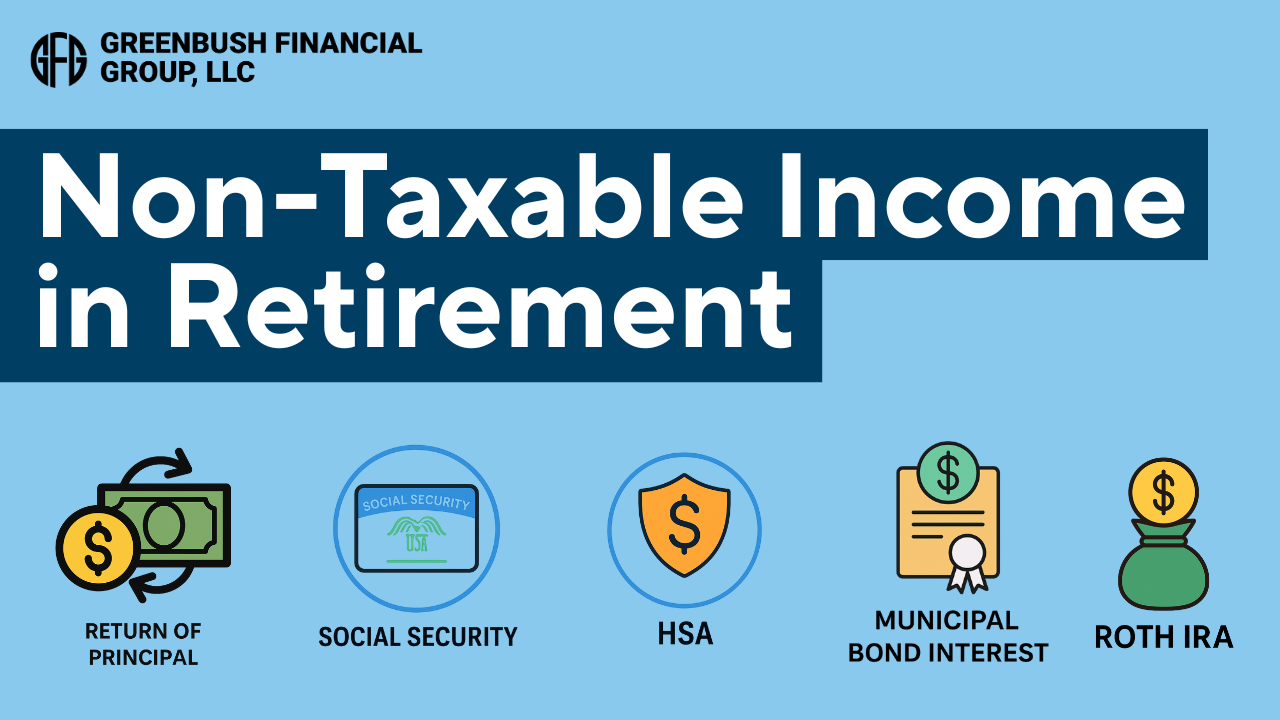
When it comes to retirement income, not all dollars are created equal. Some income sources are fully taxable, others partially — but a select few can be completely tax-free. And understanding the difference could mean thousands of dollars in savings each year.
Many retirees are caught off guard by unexpected tax hits from required minimum distributions (RMDs), Social Security, and even Medicare premiums. In this article, we break down the most common retirement tax traps — and how smart planning can help you avoid them.
Do you have enough to retire? Believe it or not, as financial planners, we can often answer that question in LESS THAN 60 SECONDS just by asking a handful of questions. In this video, I’m going to walk you through the 60-second calculation.
Squarespace Excerpt: As individuals approach retirement, they often begin reviewing their annual expenses, looking for ways to trim unnecessary expenses so their retirement savings last as long as possible now that their paychecks are about to stop for their working years. A common question that comes up during these client meetings is “Should I get rid of my life insurance policy now that I will be retiring?”
When clients are looking to purchase a new car one of the most common questions that we receive is “Should I Buy or Lease?” To get the answer, we interviewed a Certified Financial Planner and the owner of Rensselaer Honda to educate our audience on the pros and cons of buying vs leasing.
The most common questions that I receive when clients are about to purchase their next car is “should I buy it or lease it?” The answer depends on a number of factors including how long do you typically keep cars for, how many miles do you drive each year, the amount of the down payment, maintenance considerations, or do you have any teenagers in the family that will be driving soon?
A question I’m sure to address during employee retirement presentations is, “How Much Should I be Contributing?”. In this article, I will address some of the variables at play when coming up with your number and provide detail as to why two answers you will find searching the internet are so common.
Claiming the $7,500 tax credit for buying an EV (electric vehicle) or hybrid vehicle may not be as easy as you think. First, it’s a “use it or lose it credit” meaning if you do not have a federal tax liability of at least $7,500 in the year that you buy your electric vehicle, you cannot claim the full $7,500 credit and it does not carryforward to future tax years.
Establishing an emergency fund is an important step in achieving financial stability and growth. Not only does it help protect you when big expenses arise or when a spouse loses a job but it also helps keep your other financial goals on track.
When you retire and turn on your pension, you typically have to make a decision as to how you would like to receive your benefits which includes making a decision about the survivor benefits. Do you select….
More and more retires are making the decision to keep their primary residence in retirement but also own a second residence, whether that be a lake house, ski lodge, or a condo down south. Maintaining two houses in retirement requires a lot of additional planning because you need to be able to answer the following questions:
I am getting the question much more frequently from clients - "When I retire, does it make sense from a tax standpoint to change my residency from New York to Florida?". When I explain how the taxes work